Sunday, 13 November 2011

Chef Gabriele Bertaccini - House of Balsamic

My schedule was set for Saturday, November 12, rain or shine, to attend an event at Roger's Garden, Newport Beach: Chef Gabriele Bertaccini of House of Balsamic was giving a presentation on the uses of balsamic vinegar  for  holiday cooking. Along with the others who came early, under some rain shower and nippy temperatures, we filled up the outdoor tent setting.

House of Balsamic, in partnership with Roger's Garden, had invited their resident chef -  Gabriele Bertaccini, to give us a better understanding of an ingredient that can make such a big difference in the taste profile of a dish.
 
When it was showtime, Chef Gabriele Bertaccini introduced himself. He is Italian and he is very passionate about food. After pursuing his studies in the culinary arts at the Professionale Buontalenti per Servizi Alberghieri, he specialized in Tuscan cooking. His cooking style is characterized by the use of fresh and tasty ingredients by means of simple cooking technics. 

After working in some regional restaurants, he took off for foreign lands to hone his skills further. He has traveled, lived, and worked in Paris, Munich, and back to Florence, and then, somehow,  he ended up in the U.S. He is the executive chef and owner of ilTocco, a private boutique-dinner-catering service for private functions and private events he organizes - Culinary Mischief. He shuttles back and forth between Arizona and California, and of course goes back to Europe to be refreshed, back in his roots.
The stars of the show came in small bottles, in different flavors, with different ages. But the main star was the Aceto Balsamico Tradizionale di Modena (Traditional Balsamic Vinegar from Modena). 
Chef Gabriele explained the process of making balsamic vinegar.

Quite different from the Balsamic Vinegar from Modena that most of us use to make our salad dressings, dips, and marinades, Aceto Balsamico Tradizionale di Modena (Traditional Balsamic Vinegar from Modena) is made from two red  and one white Trebbiano and Lambrusco grape varieties. From the freshly harvested and pressed grapes, a must is made as it is cooked down by about 30% . A thick syrup is formed. Then, it is fermented in a slow aging process, while moving in storage through the next twelve years, in a series of seven wooden casks that graduate in size, made from a variety of wood like acacia, cherry, oak, mulberry, chestnut, and ash. This allows for the must to evaporate more. The resulting product, over the years, is a thick syrup called mosto cotto - dark brown in color with an intense flavor profile that is both sweet and sour, with a hint of flavor from the cask materials. Twelve years is the minimum time for the production of traditional balsamic vinegar.

At the end of the aging period - be that 12, 18, 25 years, or even a 100 years, a small amount is "taken from the smallest cask and each cask is then topped up with the contents of the preceding cask. Freshly reduced cooked must is added to the largest cask and in every subsequent year the drawing and the topping up process is repeated." This process is called solera or in perpetuum - where in "the product is distributed from the oldest cask and then refilled from the next oldest vintage cask." With the arrival of the new fresh harvest of grapes, a new production cycle begins."

With the same process, other fruits like apples and oranges are also being used now to make other balsamic vinegars. This makes for an efficient production time for the facilities to continue making vinegar, all year round, with the seasonal, fruit raw materials that are available.
 
The balsamic name comes from the root word "balsamum," which was an energizer, a curative agent that was once prescribed and bought from the apothecary. The shape of the bottle, as it is today, comes from the historic usage of the product, when they used to be stored and packaged by the pharmacists in a chemist's flask. 
 
 Chef Gabriele showed us how thick and viscous the syrup was, that it took awhile before it started to pour.

There was food prepared for the attendants to taste, to showcase how the addition of the different types of  balsamic vinegar could further enhance the taste of a dish, bringing it up by another notch. We were given printed recipes of Chef Gabriele. He apologized, however, that because he could not find good quality ingredients at the farmers' market, he decided to use other ingredients, thereby modifying the menu for the morning.
The first to roll out was Roasted Cauliflower Crostini with Pecorino Cheese and Orange Balsamic

The original item, as the recipe indicated in our sheets was "Brussels Sprouts Crostini with Pecorino Cheese and Orange Balsamic." Curious as to what this would be like, I made the recipe with some adjustments.
By the time I went to the Gourmet Food section at Roger's Garden, the Orange Balsamic was sold out. Since I was impatient and did not want to wait, I bought the Apple Balsamic which we had taste tested earlier. This is what I used in this recipe.
INGREDIENTS:
1/2 lb Brussels sprouts, sliced finely as for a cole slaw salad
1/3 c coarsely chopped walnuts, lightly toasted
1/3 c raisins
A sprig of parsley, finely sliced to taste
1 tbsp Pecorino Romano, shaved
A slice of uncured bacon, optional
Artisanal whole wheat bread - sliced thinly, and toasted for 2 minutes
Parsley for garnishing

In a bowl, combine all the ingredients, except the toasted bread slices, shaved pecorino and the parsley for garnishing. 

VINAIGRETTE:
2 tsp. honey
1 tbsp. Apple Balsamic
1 tsp. fresh lemon juice
Lemon zest
1/2 tsp. Dijon mustard
Half a clove of garlic, finely chopped
3 tbsp. Extra Virgin Olive Oil (EVOO)
Freshly ground black pepper, to season

In a small mixing bowl, whisk all the ingredients together, except for the EVOO. Then, slowly add in the EVOO until it is all incorporated. Add the vinaigrette to the bowl of the other ingredients and toss. Spoon over toasted slices of bread and sprinkle Pecorino Romano cheese over it. Garnish with a parsley leaf. 

* This is a saltless food preparation. The Pecorino Romano cheese is salty enough. I made this without the bacon, as I normally prepare vegetarian meals at home. But if you invite me, I will eat anything.

So simple, healthy, and so tasty. It's all about the imaginative combination of ingredients. That Apple Balsamic gave my vinaigrette a fruity punch. Now, I can eat Brussel sprouts again. With this recipe, I have come to realize that I prefer to eat it raw than cooked. We ran out of crostini so we ate the rest as a salad.

By the way, we found out that the best way to cut bread for crostini is to use the meat slicer for cold cuts. Well, I had to manage using my bread knife.

 Butternut Squash Soup

This was a replacement for the Goat Cheese and Fennel Soup. Add a few drops of Traditional Balsamic Vinegar to your squash soup recipe and it gives it a hint of a sweet and sour flavor, that makes it molto delizioso.
 
Braised Short Ribs with Mash Potato

This was like home cooking, a comfort food which we all loved. It was cooked with herbs and  Barolo wine and baked for two hours after the initial preparations. It was served side by side with the mash potato that was made with mascarpone, butter, cream, milk, Parmigiano Reggiano, then Saba Balsamico was drizzled on top. Saba is another grape variety.

One thing I learned is we are NOT suppose to cook with balsamic vinegar, or we will end up with sugar. The Traditional Balsamic Vinegar is quite pricey. A 100 ml bottle sells from $90.00 to $500.00, depending on the age. To drizzle it on your cooked food is the best way to get the most out of this gastronomic ingredient.

I took out my small bottle of balsamic vinegar from Modena being marketed under a store label. It was interesting to note that it was also in a small bottle and the inscription read "Gold Quality Balsamic Vinegar of Modena. Premium Aged." I asked myself what all these meant? This product was aged for 12 months and not 12 years.  The product characteristics are different. 

As we say, we get what we pay for. The next time I buy balsamic vinegar,  I will look for the designation Dominazione di Origine Protetta and the European Union's Protected Designation of Origin. This will authenticate the product as the real thing or not.

Here's a short cut to your search for the authentic balsamic product. A vist to House of Balsamic can facilitate that. Buon Appetito!

Monday, 7 November 2011

Part 3: Avalon, Catalina Island - East End Tour , our Other Adventurous Tour

The morning was over and we had conquered our fear of heights. Now, we were going on a sightseeing tour of the island. There was nothing to fear about.  We shall find out!

The East End Tour began at the Tour Plaza where we boarded our open, canopy-covered vehicle, good for 12 people. The open hummer that we were expecting to ride was out on maintenance service. 
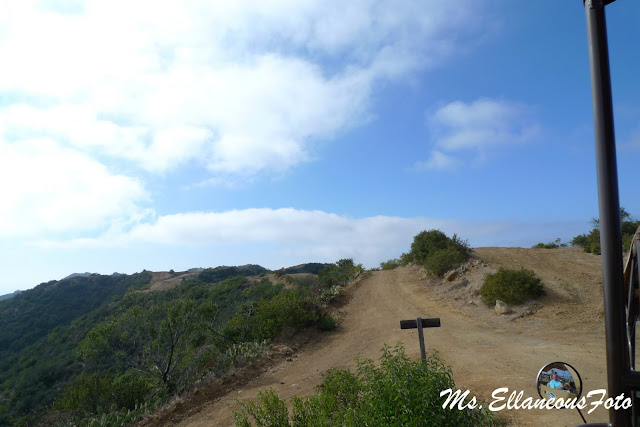
This type of vehicle is customized, to make sight seeing and taking pictures easy for us, tourists. First, we were driving on asphalted road, then on pebbled, dirt road. The higher we drove up, the colder it became. It was an icy chill that we were feeling to the bone. The blankets provided on the seat pockets helped, somewhat.

We were on our way and Christine, our driver and tour guide, had interesting bits of information to share with us about Catalina Island.
This grove was cleaned up to reveal the cemetery, after it was discovered that there were people living in the premises. A good number of people were buried here between 1904 and 1972.
The next turn brought us to the vista point to see some of the most spectacular views of the town and Avalon Bay.
This was the breathtaking view from the Wrigley mansion, where William Wrigley and his family had lived. 

Before the Wrigleys came to Avalon, there were a couple of  pre-settlers, European settlers, and developers who had settled on the island. In the 1830s, the native population seemed to have either died or migrated. 


California became a part of Mexico when she was ceded over to Mexico, when Mexico won her fight for independence from Spain. In the 1840s, Pio Pico - the Mexican governor gave Catalina Island as a grant to a certain Don Jose Cornuvias of Santa Barbara. It became Camp Santa Catalina Island, during the Civil war. In the 1860s, James Lick took over control of the island for a quarter of a century. In 1887, George Shatto from Grand Rapids, Michigan purchased the island for $200,000.00 from Mr. Lick. 


George Shatto developed a part of the island that is now known as Avalon. His sister Etta Whitney came up with the name which means "bright gem of the ocean." Shatto worked on making this a vacation destination, bought a steamship to ferry the passengers from the mainland to Avalon and back. Unfortunately, after a couple of years, the business faltered and the land went back to the Lick estate, as he defaulted on his loan.

In 1891, another family got into the picture. The children of Phineas Banning bought the island and organized the Santa Catalina Island Company to develop the island as a resort. However, their efforts were thwarted by a fire that destroyed much of the developed areas of Avalon. With several factors and World War I going against their plans, they started to sell shares of the island in 1919. And next came the Wrigley family.

The Wrigley Mansion, where the Wrigleys had entertained some famous guests.
This was donated to the University of Southern California in 1970 to be used as a conference center. In 1985, it was turned into The Inn on Mt. Ada.

William Wrigley, Jr. (1861 - 1932) made it on his own after several attempts, after working for his father selling soap. He developed his own marketing strategy by always selling something with something as a give away. At 29, he moved his whole family to Chicago to start his own business with his cousin, after securing a loan from his uncle for $5,000.00. With baking powder as the giveaway for the soap, he realized that it was more desired by the customers rather than the soap. He, then, concentrated his efforts on selling baking powder with chewing gum as the giveaway. You guessed it. The chewing gum became the reason as to why the baking powder was selling. After grasping the taste of the people for the gummy products, he  concentrated his efforts at selling gums. 

Inspite of the competition, he was very successful after launching two product names - Lotta Gum and Vassar. He discovered the wonderful consequences of advertising and the giving away of premium gifts, that soon he produced a premium  catalogue for people to choose their gifts from. His advertising motto was "Tell them quick and tell them often."

It was in 1893 when his chewing gum business shot to fame with the introduction of "Juicy Fruit" and "Spearmint Gum." Although the origins of gum making was attributed to New Yorker, Thomas Adams, who had introduced "Chicle" in the 1860s, the title of "Father of Chewing Gum" went to Wrigley. He became the biggest gum company. He went international, opening gum plants abroad and selling his products in 30 languages. 

With his profits of into the millions, he bought the Chicago Cubs - at first, buying some shares in 1919 and then he became its majority stockholder in 1921. He was an avid baseball fan and was always watching the hometown games. He also bought the Cub Park which later became Wrigley Field, the Los Angeles Baseball Club, and a team in Reading, Pennsylvania.

At the same time, he invested in the west, buying Catalina Island off of the California coast, and made it into a family retreat. He turned it into a resort, developing the island - making great improvements in the provision of public utilities, commuter transportation, lodging for visitors, bringing in fauna and flora, and constructing a Casino that was not a casino as you would expect it to be. 

He also continued his investments in Chicago, pumping money for the construction of the Wrigley building that was to be the headquarters of his gum company, as well as int Arizona when he bought a winter resort - the Arizona Biltmore. He had accomplished much while spousing a simple philosophy of "To be always pleasant, always patient, and never argue." He repeatedly told his son that they had a "five-cent business, and nobody in the company can ever afford to forget it."

 William Wrigley, Jr. died at the age of 71. His son, Philip, took over the reigns of the SCIC.
A side gate with hundreds of steps leading up to the house 
The Chicago Cub team used to come to the island for their summer training. They were said to have ran up and down these steps to build their stamina.
The driveway entrance
A side view of the bay and the round-shaped Casino Building , which has been the focal point for entertainment and culture since it openend in 1929.
A view of another town on the island - Lovers Cove
The Avalon Water Treatment Plant
Our very able driver, Christine, maneuvered in and around the mountain dirt road with such precision or...

we would have gone down fast, off the roadside! Several of us had focused on looking straight ahead when our fear of heights got triggered, as we looked down the canyons.
We made it to almost the top of the island, close to 2,000 above sea level. I had to sort of stand up during the ride, with my seat belts on, to protect my lower back condition from being jarred. Some parts of the ride were violently bouncing us. 
After that rough ride to the top, it sure felt it was worth it. From here, we were able to see the town of Avalon, the Pacific Ocean, a panoramic view, and felt the warmth of the sun. We also saw some hikers along the way - how gutsy of them, I thought.
Somewhere up there, we saw these two bisons.

The bison herd is not local to Catalina Island. It was when a silent movie was being filmed in the island that a herd was brought over. When the filming was over, and the Zane Grey production company was packing up, 14 buffalos refused to board the boat, so they got left behind and multiplied. In the course of time, they got too many and overpopulated the island, causing damage to the eco system. Today, the herd is kept to a maximum number of 150 to 200. There is a program for the females that keeps them from overpopulating the island.


The conservation and preservation of the wildlife in the island is now under the supervision of the Catalina Island Conservancy, a nonprofit organization. The children of William and Ada Wrigley - Philip and Dorothy, had donated 42,135 acres of the island and 48 miles of the coastline to the conservancy in 1975. A balance between the recreational uses of the island and keeping nature in check is being worked at. This gives the assurance that the island's natural beauty and charm can be enjoyed for generations to come.

From here, we were back on paved roads. Heading down was a more relaxed ride. 
The water reservoir with a protective cover to keep the animals and other things from getting into the water.
Called the Rose Garden, after the person who tends it, there is no rose plant in this garden.
Traces of last May's fire, which started as a brush fire behind the yacht club, leave a tell tale sign of  bare, charred branches. Some 30 acres were scorched to the ground.
A water basin for catching rainfall
This is a view I captured with a random click. I had my camera aimed at all times.
The woodpeckers have made storage holes on the tree trunks - note the black dots in line formation.
Part of the winding road was lined with eucalyptus trees. They were originally imported from Australia in 1941.
Memories of our morning adventure came back when we saw this zipline platform.
A view of Descanso Beach Cove
As we made it down on the other side, we saw the interior landscape of the island where the residential areas had been established. We passed a house that now belongs to a descendant of Shatto, another one which was once the resident of a Hollywood actress, and a mansion belonging to the grand daughter of WIlliam Wrigley.

As picturesque as this place is, for now there are signs about no swimming in the bay. A budget has been earmarked to address the pollution being caused by an antiquated sewage system. As the conservancy strives to retore the island's natural equilibrium, we can all look forward to having a nice visit to this beautiful "gem in the ocean."

Monday, 31 October 2011

In the Kitchen: Recycling Leftovers to Make Breakfast Tacos and Omelet

I bet you all have some ways of recycling your leftover food from previous meals. My designated days to do this are usually towards the end of the week. 


On Friday, I used my leftover Bolognese sauce that was made with:
- ground meat (from grass-fed cows, hormone free) 
- uncured sausage - Andouille, diced
- fresh, organic heirloom tomatoes, red onion, garlic (lots)
- herbs - rosemary and oregano (homegrown)
- dash of pepper, but no salt.


I took stock of what else I had and figured out that I could make Breakfast Tacos. I gathered my other ingredients:


- 2 pieces whole-wheat flour tortillas, warmed up
- 2 pieces of romaine lettuce leaves, finely  shredded
- Some grated cheddar cheese
- Sour cream (sBST free = hormone free, preservative free)


 I drained much of the liquid part from the Bolognese sauce and I warmed up my  sauce in a ceramic-coated skillet. 

My Breakfast Tacos

You know how to do this part. On the half side of the tortillas, layer the ingredients starting with the meat sauce, then the shredded lettuce. Add some grated cheddar cheese, and finish off with 2 dollops of sour cream. Fold over the other half side of the tortilla. Done!

Fast and easy. This turned out so well, tasty and filling. It was good nourishment to start the day.

Did you notice how I use mostly organic ingredients? They help me get well - it's about healing my body through nutrition. My drug/medication popping days are over. No more pills for every ill.

* * * * *

My cousin had shared how her mother just made an omelet out of their leftovers. For Saturday, that's what I made with my fish stew, made with:

- a fillet of tilapia
- organic heirloom tomatoes, red onion, and garlic
- rosemary from my garden, finely cut
- organic canned chick peas
-organic canned tomato with purée
With 2 organic eggs that were whisked with some homegrown parsley...
plus the fish stew,... 
cooked on my skillet (lightly oiled with cooking oil - NOT EVOO),  folded over when it was half cooked...
and garnished with some shredded cheese,...
Voila! My omelet is ready. Yummylicious!

It's Monday and my refrigerator is stocked up, once again,  with new ingredients for the days ahead. I love cooking when I just throw things together, without worrying about a recipe to follow.

Just a note about extra-virgin olive oil: When I visited Turkey (4th largest producer in the world of olive oil products) I was made aware of the toxic consequences when using EVOO for cooking. Yes, I'm sure you watch all the chefs on the Food Channel using EVOO for cooking - that does not mean they are doing the right thing. I just want to be on the safer side. I, now, only use extra-virgin olive oil for salad dressings, or add it to my finished cooked foods whenever I want the added flavor of olive oil.

Just have fun in the kitchen! For the most part, only baked goods need precise measurements and ingredients to turn out well. Once you have a fair idea of flavor combinations, ingredient compatibilities and rate of usage, you are on your way to making something good - just throw them in together!

It's the eve of hallow and I will be cooking some angelic goodies. Thanks for the recipes contributed on "foodbuzz" I got lots of ideas. Have a safe, fun, and healthy celebration this halloween.

Wednesday, 26 October 2011

Part 1: Assisi, Italy - St. Francis

Visiting medieval towns in Europe is something that fascinates me. In Italy, I had the good fortune to return to Rome for the beatification of Blessed Pope John Paul II last May 1, 2011, after which a good friend and I had made plans to continue on to Assisi. As we celebrated the feast day of St. Francis last October 4, I was reminded to look back at my pictures taken during that visit. 

We took a train from Rome and in less than 2 hours, we arrived in Assisi. At the train station, we rode a taxi to start our journey.
A panoramic view of Assisi from the train

Assisi is a medieval town that sits at a higher elevation of 1,300 feet in Umbria, in central Italy,  about 12 miles east of Perugia. It is one of the oldest cities in Italy and said to have had it's Christian roots  dating back to St. Crispolitus, who was a disciple of Peter the Apostle. This is a sacred destination for pilgrims as it is the birthplace of a beloved Catholic saint, Saint Francis - the founder of the Franciscan order. 

Once we got to Assisi, the thoughts of St. Francis as a peacemaker and the man who loved everybody came flooding back. I had read books and watched movies about him, and here I could feel his spirit.

Our first stop was this church.
 Basilica Papale di Santa Maria Degli Angeli in Porziuncola (Papal Basilica of St.  Mary of the Angels in Portiuncula)

Inside this grand Baroque structure, built in 1569-1679, are two smaller structures - a small chapel - the Porziuncola,  that was restored by St. Francis, where he founded his order; and where St. Clare took  her vows for a monastic way of life, on March 28, 1211. The other place   is La Capella del Transito  (the Chapel of the Transit) where St. Francis died on October 3, 1226.

Assisi has also become a site for world peace conferences.
This bronze bas-relief was installed on the façade of the church to commemorate the Assisi Peace Conference, October  27, 1986, which was spearheaded by Pope John Paul II. Members of the different faith traditions are represented here.

This peace effort was launched at the time of the United Nation's declaration of the International Year for Peace, 1986. In his efforts, the pope invited all the religions of the world to take part in this conference, to start a "global movement of prayer for peace." This was the first conference that was ever attended by leaders of the major religions. Though, peace has several components that involves "the commitment from the political, social and economic fields, on the part of governments, international organizations, and civil societies," it is a reality "that is formed in hearts, born from the loftiest human aspirations." There were three elements of peace that were highlighted, although "in different forms in almost all religious traditions: prayer, pilgrimage and fasting."


Pope John Paul II clearly explained the reasons and the implications behind the gathering to pray together, with the religious leaders in the town of Assisi:  "The fact that we have come here does not imply any intention of seeking a religious consensus among ourselves or of negotiating our faith convictions. Neither does it mean that religions can be reconciled at the level of a common commitment in an earthly project which would surpass them all. Nor is it a concession to relativism in religious beliefs." This was a moment of brotherhood - a spiritual sharing among the people of good will, something that typified St. Francis' spirituality.

After September 11, 2001, when violence, hatred and disunity appeared because of religious principles and beliefs, Pope John Paul II, called for another caucus, to bring back the religious leaders to Assisi. The Day of Prayer for Peace in the World came to pass in Assisi, on 24 January 2002. It was to condemn terrorism and, once again, to reiterate the role of religion in "fostering an atmosphere of peace, justice and brotherhood in the world"...and "to bring Christians and Muslims together to proclaim to the world that religion must never be a reason for conflict, hatred and violence."

Back on the road, in the taxi we had commissioned for the ride up to the town of Assisi...
 
we had a view of the Franciscan basilica and the friary, on the drive up.
This was our home sweet home on Via Galeazzo Alessi, 10--6081 Assisi - St. Anthony's Guest House, under the management of the Franciscan Sisters of the Atonement. At 45 € a night for a single room, that was a deal!

Without wasting another minute,  we were out the door as soon as we settled our bags in our rooms. On foot, it was so easy to find every place we wanted to visit. Down and up the winding roads and in and out of shrines, everything we saw was just like eye candy. 
 
Entry into some private homes
 
On a street to go to a busier section of town...
 
in search of whatever we could find. To the left was a setup for the forthcoming celebration of the  Calendimaggio Festival.
 Santa Maria sopra Minerva


This Baroque church is sandwiched between other structures. The classic façade is original,  for when it was the Temple of Minerva, dating back to the time of Christ.
 
A sampling of the Baroque ornamentation in the church


Continuing on our walk, we passed the... 
Musei di Assisi
It was just as interesting to peek at pedestrian pathways, such as this one.

In September 1997, two catastrophic earthquakes hit central Italy and Assisi sustained some serious damage. Looking around for signs of what had befallen this place, we could tell from the type, the color and texture of the stones which parts of the city were damaged. 

It's an all-Italian sight, all around, except for the tourists.
Ingredients for the Mediterranean gourmet cook

Hand-painted ceramic pieces from Deruta, Italy
 
Stone mosaics
 
An arch entry way branching off to another road

One of the places that was heavily damaged was the Basilica di San Francesco. Upon inspection, there was falling rubble that practically wiped out the frescoes by Bencivieni de Pepo Cimabue. City officials embarked on a reconstruction project of the damaged church. By November of the same year, the basilica was reopened to the public after the structure was installed with a  stretch-and-snap-back wiring system that was to protect it from future tremors. It was finally completed in November 1999, at an estimated cost of 50 million dollars.
It was understandable that this rebuild-Assisi project was given priority. Assisi relies on it's tourism industry. The local officials wanted to reopen their gates to the pilgrims and tourists, as soon as possible. Much to the disappointment of the local people who were left unaided and still living in temporary quarters after their places were condemned and declared uninhabitable, they were angry and complained about how they remained without permanent houses while the church had been finished. 

It is not possible to get lost here. All roads lead to the Basilica di San Francesco.

The story of Francis is that of a radical conversion. The legendary story begins with Francis not wanting to come out until a pilgrim came to tell his mother that he was going to be born in a "stable of straw." 

He was born into a family with great means. His parents were prosperous. His mother - Lady Pica, was of noble lineage, and his father - Pietro, was from a family of merchants and weavers. He grew up learning about his father's business. As he   assisted him, he learned the trade and was turning out to be a very good businessman. He also grew up learning worldly ways and was considered a most eligible bachelor. 

In the time of his youth, Europe was recovering from the fall of the Roman empire; the crusades were trying to recover the holy places from the moslems;  the church was in turmoil; political corruption was rampant; knighthood and chivalry were in fashion; there were wars going on here and there. When Assisi was at war with Perugia, Francis joined the forces to defend his hometown. He was taken prisoner. It was after his release that changes began to happen. He heard the call from God and he responded. He changed his ambition from being a crusader to being a man of peace, by loving everyone as Christ did. From a man of means he became a beggar, giving up everything - including his inheritance. He began to spend more time in prayer. In the Church of San Damiano, an old shrine that was now in ruins, he heard a voice: "Francis, do you see that my house is in ruins? Go and return it for me." Thus, began his new life, with full dependence on God's provisions. By his example, he led others to God. He put the church hierarchy on edge when they realize that here was a man who had taken the gospel and literally lived it, with no further interpretations.

Several movies have been made about his life.  Among them was one made by Roberto Rosellini in 1950, then, a romanticized version made by Franco Zeffirelli and released by Paramount Pictures in 1972 "Brother Sun, Sister Moon." There are still others, and one that depicted his humanity more was by Liliana Cavani in "Francesco - Francis of Assisi," with Mickey Rourke playing the lead role.

A side entrance to the Basilica di San Francesco
This is the main attraction in Assisi, her "crowning glory." It is a destination for pilgrims and art lovers.

In the movie St. Francis of Assisi (a Perseus Production, a Cinesmascope Picture released through  20th Century Studio in 1961) many more scenes painted by Giotto, such as these, were photographed and used in the introduction of the movie.


This is one of several altars in the basilica, on the ground level.


I was able to hear mass in the crypt, that was being said for a Spanish delegation.


Right above the altar is where St. Francis is entombed.

One of many messages St. Francis received, while in prayer

Frescoes were every where, and this is right by one of the side entrances into the upper part of the church.

An exit leading to the courtyard

The Gift Shop/Religious Store

A panoramic view of the city belowAssisi

The courtyards 

A message of peace on the church grounds

Heading down on another course...
Once a final resting place

Looking back at the basilica


Steps to get in and out of dwellings


The evening has come

And soon it will be time to go.

My visit to Assisi brought the spirit of St. Francis to mind. Inspired by this man who preached the gospel by example - for his was a life so simple, in poverty of worldly goods, in search of a spirituality beyond what the world could offer, made me think about my priorities in life.  

To commemorate the 25th year since the first peace conference was held, Pope Benedict XVI will have a rendezvous with the religious leaders, to move forward and face the challenges in fostering world peace. Set for October 27, 2011, in this same place, coming from different parts of the world - representing various major, world religions, as well as known figures in the scientific and art circles, are the "Pilgrims of Truth, Pilgrims of Peace," as eloquently described by the theme of this conference. Let us, each, be a traveling companion to the pilgrims heading to Assisi, in prayer, in thoughts, in deeds and by fasting.

LinkWithin

Related Posts with Thumbnails